
Good leash etiquette on a shared path comes down to three things: keep your dog close, keep them on one side, and step aside early when someone is coming. Do that and walkers, runners and cyclists can pass you without slowing down.
That's the whole idea. The rest is knowing what to do at the tricky moments, like a bike coming up behind you or another dog heading your way on a narrow trail.
What is good leash etiquette on a shared path?
A shared path belongs to everyone on it. Your dog has every right to be there, but so does the jogger with headphones in and the kid on a scooter.
The basics:
- Short leash when anyone is near. Leave enough slack for your dog to walk comfortably, but not enough to reach across the path.
- Keep your dog on the edge side. Walk between your dog and the middle of the path, so passing traffic meets you, not your dog.
- Stay to one side of the path. In most places that means the right, but follow local signs.
- Don't let your dog greet strangers uninvited. Plenty of people love dogs. Some are scared, allergic or just busy. Let them choose.
- Pick up after your dog, every time. Carry more bags than you think you need.
Check the rules wherever you walk, too. Some parks and trails set a maximum leash length or ask that dogs stay on a leash at all times. Signs at the trailhead usually say.
How do you pass people and other walkers?
When someone is coming towards you, shorten the leash before they get close, not when they're right next to you. A leash that's reeled in at the last second usually comes with a lunge.
- Spot them early. Look up the path as you walk, not just at your phone.
- Gather the leash. Fold the extra length into your hand so your dog sits by your leg.
- Move to the edge. Give the other person the wider part of the path.
- Keep walking. Stopping dead can make some dogs more excited. A steady pace past people tells your dog this is normal.
If your dog is still learning, step off the path completely and ask for a sit. Reward them while the person goes by. Our guide to holding a dog leash without hurting your hand shows how to fold the extra length safely, without wrapping it around your fingers.
What should you do when a bike or runner comes up behind you?
This is the one that catches people out. You can't see it coming, and a dog that steps sideways at the wrong moment can cause a crash.
- Listen for bells and footsteps. If you walk with earbuds, keep one out or the volume low.
- Pull in tight when you hear something. Bring your dog right to your side straight away.
- Don't let the leash cross the path. A leash stretched across a path is a tripwire. It's the most dangerous thing a dog walker can do on a shared path.
- Stay predictable. Hold your line. Sudden swerves are harder for a cyclist to plan around than a person walking steadily on one side.
A fixed leash makes all of this much easier than a retractable one. You can shorten it in a second, and you always know exactly how much line is out. If you're choosing a length, our post on how long a dog leash should be compares 4 ft and 6 ft.
How do you pass another dog on a narrow path?
Not every dog wants to meet yours, and a nose-to-nose greeting on a tight leash can go wrong fast. Unless both owners clearly say yes, assume the answer is no.
- Make space. Cross over, step onto the verge, or wait at a wider spot for the other dog to pass.
- Put yourself in the middle. Walk so you're between your dog and the other one.
- Keep the leash loose but short. A tight leash can make a dog feel trapped and more likely to react.
- Distract and reward. Hold a treat by your leg and keep your dog's attention on you until the other dog has gone by.
- Ask before any greeting. "Is your dog friendly?" takes two seconds. If they say no, or hesitate, walk on.
If you see a dog wearing a yellow ribbon or a "give me space" vest, give them plenty of room. Their owner is telling you their dog needs it.
What about pinch points, gates and bridges?
Narrow bridges, gates, stiles and blind corners are where most leash trouble happens. There's no room to step aside, and you often can't see who's coming.
At any pinch point:
- Shorten the leash before you get there.
- Look ahead and wait if someone is already coming through. It's quicker than squeezing past.
- Go through first and bring your dog after you, so you're in control on the other side.
- Slow down at blind corners. Keep your dog on the inside of the bend, close to you.
If you walk more than one dog, all of this matters twice as much. Our two-dog walking guide covers keeping two leads tidy.
Ready to walk the path with confidence?
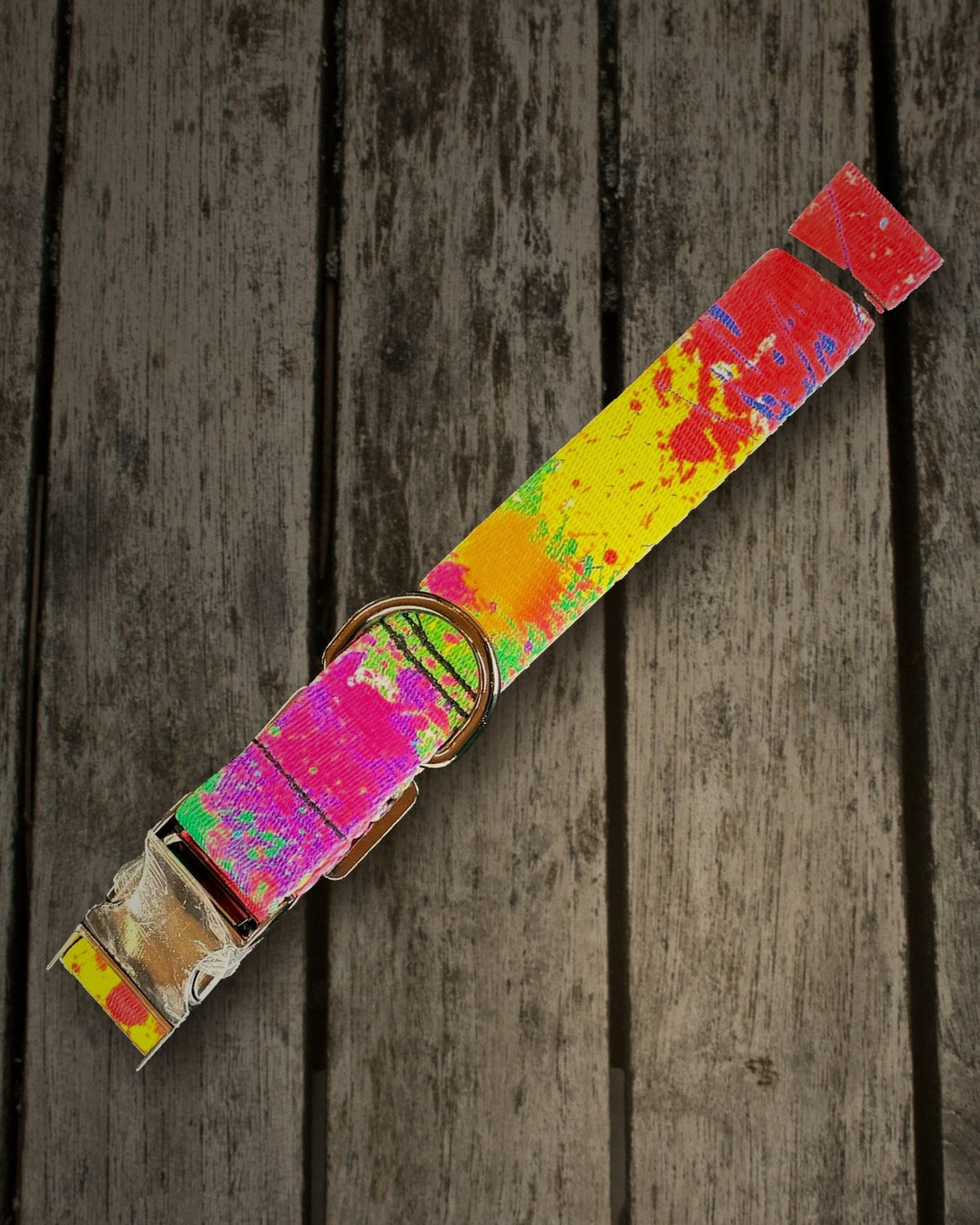
A leash you can grip and shorten fast makes shared paths much easier. Our handmade dog leashes come in 1/2 inch, 1 inch and 1 1/2 inch widths, each with a stitched handle and a solid cast, weld-free snap hook. Pick a bright print and other path users will spot your leash sooner, too.
FAQ
Should my dog be on a leash on a shared path?
On most shared paths, yes, and many have rules that say so. Even where it's allowed, keep your dog leashed near bikes, children and other dogs. Check the signs where you walk.
Which side should my dog walk on?
On the side away from passing traffic. You walk between your dog and the middle of the path, so anyone overtaking meets you first.
Are retractable leashes OK on shared paths?
They're hard to manage around bikes and other dogs. The thin line can stretch across the path, and it takes time to reel in. A fixed 4 ft or 6 ft leash is safer and simpler.
Need a matching collar to go with your new leash? Browse our collar and leash sets.