
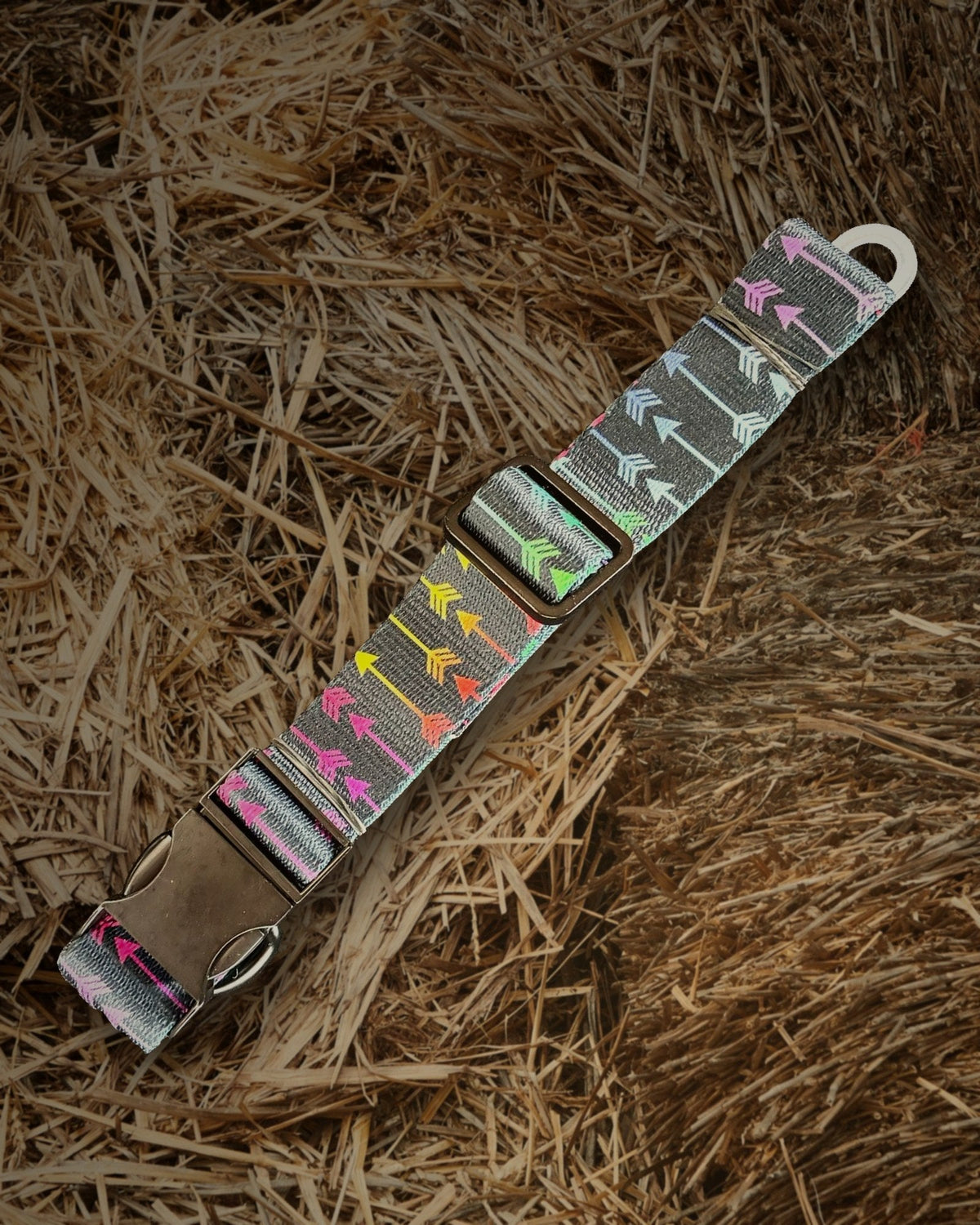
To hold a dog leash without hurting your hand, put your thumb through the handle, close your fist round the strap and fold the extra length flat into your palm. Never wrap the leash round your fingers or hand. A wrapped strap squeezes tight when your dog pulls, and that's where most sore fingers, red palms and leash burns come from.
The rest is about where you hold your arm, what the leash is made of, and teaching your dog that a tight leash doesn't get them anywhere. Here's how to put it together.
Why does holding a dog leash hurt your hand?
Usually it's one of four things:
- The leash is wrapped. A turn of strap round your fingers works like a tourniquet. Every pull tightens it.
- The strap is too thin. A narrow strap puts all your dog's pull on a thin line across your palm. The same pull on a wider strap is spread out and hurts less.
- The leash slides. When your dog lunges and the strap runs through your hand, the friction burns. That's leash burn, and it happens fastest with thin, slick cord.
- Your arm is out in front. A straight arm reaching forward takes every pull in your fingers, wrist and shoulder. A bent arm close to your body uses your whole frame.
None of these mean you need a smaller dog. They mean the leash needs to sit differently in your hand.
How should you hold a dog leash?
This grip works for most people and most dogs:
- Thumb through the loop. Slip your thumb, not your whole wrist, through the handle. The loop sits across the back of your hand where it can't slip off.
- Close your fist round the strap. Grip the leash just below the handle. Your fist takes the load, not the loop.
- Fold the slack, don't wrap it. Take up extra length in flat folds across your palm, like a concertina. Let a fold out when your dog needs more room. Take one in when they need to be closer.
- Keep your hand low and close. Rest it near your hip, elbow bent and relaxed. If your dog pulls, your body weight holds them, not your fingers.
- Use the other hand as a brake if needed. For a big or excitable dog, put your second hand further down the leash. It shortens the line and splits the pull between two hands.
The fold is the whole trick. Folds let go when you open your hand. Wraps don't. If a large dog bolts after a cat, you want to be able to let a little leash run, not get yanked off your feet by a strap that won't release.
What if you have arthritis or weak hands?
Stiff or sore hands make a hard grip harder. A few changes help:
- Let your body take the load. Hold the handle against your hip or the front of your thigh, so a pull pushes into your body instead of your fingers.
- Choose a wider strap. Our leashes come in 1/2 in, 1 in or 1 1/2 in widths. If your dog is a big puller or your hands ache, a wider strap gives your palm more to hold and spreads the pull.
- Walk the puller in a harness. A harness doesn't stop pulling by itself, but it takes pressure off your dog's neck while you train. On our collars, a harness is a Style option, sized by chest from the size guide.
- Keep the leash shorter. A dog close to your side can't build up speed before the leash goes tight, so the pulls are smaller.
If even a short walk leaves your hands sore, split it into two shorter walks while your dog learns better manners.
Does the leash itself make a difference?
Yes, more than most people expect. What to look for:
- A handle that holds its shape. A stitched handle that stays open is easy to slip your thumb into and doesn't fold into a thin cord under load.
- Flat strapping, not round cord. Flat strap sits in your palm. Thin cord digs in and burns when it slides.
- A width that suits the dog. Small dogs don't need a wide lead, but a strong dog on a skinny strap is hard on your hands.
- Solid hardware. A heavy-duty snap hook means you can hold firm without worrying about what's at the other end.
Every leash we make is cut to order from heavy-duty ratchet strapping, with a stitched handle and a solid cast, weld-free metal snap hook. If you need a length you can't see on the site, ask through the custom order form.
How do you stop leash pulling from hurting at all?
The grip makes pulling hurt less. Training makes it happen less. The simplest method is to stop the moment the leash goes tight and only walk on when it goes slack. Your dog learns that pulling stops the walk and a loose leash keeps it going.
It takes patience, and plenty of short walks. But every week of it means less strain on your hands, your shoulder and your dog's neck.
Ready to make walks easier on your hands? Browse our handmade dog leashes, pick a width that suits your dog's pull, and practise the thumb-and-fold grip on your next walk.
FAQ
Should you wrap a dog leash around your hand?
No. A wrapped leash tightens when your dog pulls and can't be let go in a hurry. It can crush fingers or pull you over. Fold the slack flat in your palm instead, so you can open your hand and release it.
How do you stop leash burn on your hands?
Hold the leash so it can't slide: thumb through the loop, fist closed below it, slack folded in your palm. A flat, wider strap burns far less than thin cord. If your dog lunges a lot, a pair of light gloves helps while you work on training.
What width leash is easiest to hold?
For a medium or large dog, a 1 in strap is comfortable for most hands. For a strong puller or if your hands are sore, 1 1/2 in spreads the pull further. Small dogs are fine on 1/2 in, since there's little pull to spread.
Find a leash that's comfortable to hold in our leash collection.