
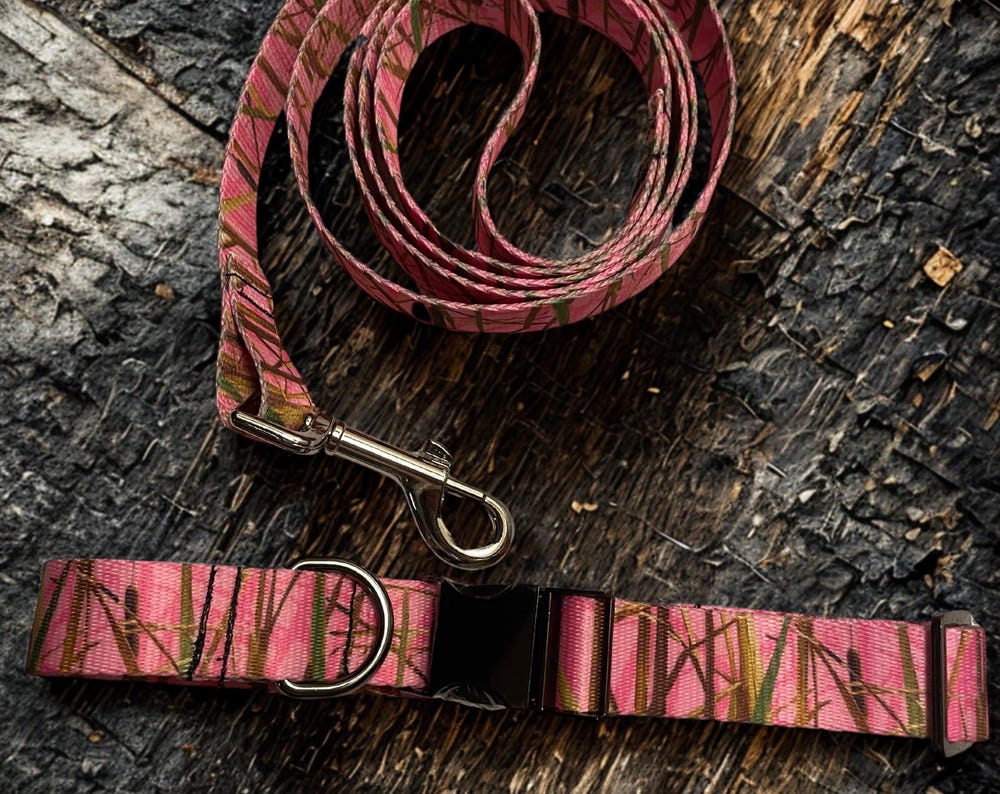
Buy the collar that fits the neck your puppy has today, not the neck they'll have at a year old. Measure, add two fingers, and pick that size — then check the fit every week and move up when the adjustment runs out.
That's the part that surprises new puppy owners. The instinct is to buy big and let them grow into it, and it's the one thing you shouldn't do. An oversized collar slips over the head at exactly the wrong moment.
What size collar does a puppy need?
Most puppies start in a Small. A few large-breed pups are already past it by the time they come home.
Our collars run in five sizes, by neck measurement:
- Small: 8 to 11 inches. Nearly every puppy under four months, and toy breeds for life.
- Medium: 11 to 14 inches. Where most medium-breed pups land around four to six months.
- Large: 14 to 18 inches. Beagles, collies and similar once they're most of the way grown.
- XL: 18 to 22 inches. Labradors, goldens and shepherds, usually from six or seven months.
- XXL: 22 to 28 inches. Giant breeds, and generally not until well past a year.
A Great Dane puppy at ten weeks may already need a Medium. A Yorkie will stay in a Small forever. Breed charts give you a rough idea of where you'll finish, but they're no use at all for what to order right now. The tape measure is.
How do you measure a puppy's neck?
Same method as an adult dog, just with more wriggling.
- Find the spot. A collar sits low on the neck, just above the shoulders — not up under the jaw. Feel for where the neck meets the body.
- Wrap a soft tape snugly around that spot. String and a ruler work if you don't have a tape. Never a metal tape measure.
- Slide two fingers, flat, underneath. If they fit without forcing, that's your tension. If they don't, loosen and read again.
- Read the number and write it down. Take it twice — puppies move, and a second reading catches a bad first one.
Measure against the skin, not over the coat. Fluffy puppies read a full inch bigger over the fur than under it, and a collar settles into the coat within a day. That inch is the difference between a collar that fits and one your pup backs straight out of.
Do it after a nap or a play session, when they're tired. You can type the number straight into the size finder on our size guide and it will tell you which size to order.
How much room should you leave for growth?
Two fingers. That's it — the same as for a grown dog.
Every collar we make has an adjustment range inside its size, so an 8.5-inch neck and a 10.5-inch neck both wear a Small. That range is your growing room. You don't need to add extra on top of it, and you shouldn't.
Here's why the "buy big" approach goes wrong:
- A loose collar comes off over the head. Puppies back up when they're startled. That's the moment they need the collar to hold.
- A loose collar snags. Crate bars, furniture legs, another dog's jaw during play. A collar with a hand's width of slack is a loop waiting to catch on something.
- Loose gear rubs. A collar that slides back and forth all day wears a patch in thin puppy fur.
- The leash doesn't work properly. A collar sitting halfway down the neck gives you no useful contact for lead training.
One real exception: if your dog's measurement lands right at the top of a size range, go up. There's no room left at the end of an adjustment for a growth spurt or a thicker winter coat. If the number lands at the bottom of a range, stay in that size.
How many collars will one puppy go through?
Usually two or three before they're fully grown, depending on how big they finish. A toy breed may never leave the first one. A large-breed pup will typically go Small, then Medium, then land in their adult size somewhere around eight to twelve months.
That's not waste — it's the cost of a collar that actually fits during the months your dog is learning to walk on a lead.
To make the checks a habit:
- Check the fit weekly until six months, then monthly until a year.
- Two fingers, every time. If you can only get one in, move up. If you can get a whole hand under it, tighten a notch.
- Do the ear test. Hold the collar and pull it gently toward the ears. It should stop at the head, not slide over it.
- Recheck after a groom or a growth spurt. Both change the fit overnight.
- Watch the buckle hole you're using. When you're on the last one, order the next size.
A practical way to spend the money: a plain Small to get through the fast-growing months, then the good matching set in their adult size once the growth has settled.
Ready to size your puppy's first collar?
Measure the neck, add two fingers, and order the size your tape says. Every collar is cut to order from heavy-duty strapping with solid cast, weld-free metal hardware, so there's nothing on it to bend open when your puppy hits the end of the leash for the first time.
Browse the handmade collars, or pick a matching collar and leash set once you know the size they've grown into.
FAQ
Should I put my phone number on a puppy collar?
Yes — arguably more than on an adult's. Puppies are the ones who slip out of a gate. Every collar can be embroidered with your dog's name and your phone number, priced per letter, and a number stitched into the strap can't fall off the way a dangling tag can.
My puppy's neck is between two sizes. Which do I order?
If the number is near the top of a range, go up. If it's near the bottom, stay put. Send us the measurement through the custom order form if you'd rather have a second opinion, or have one cut to your exact number.
When should a puppy start wearing a collar?
As soon as they're home and settled, for short stretches at first. Put it on for a few minutes during something fun, then take it off. Build up from there. Don't leave a collar on an unsupervised puppy in a crate.
Know your number? Check it against the size guide and pick a print — the collars are all cut to order in every size from Small to XXL.