
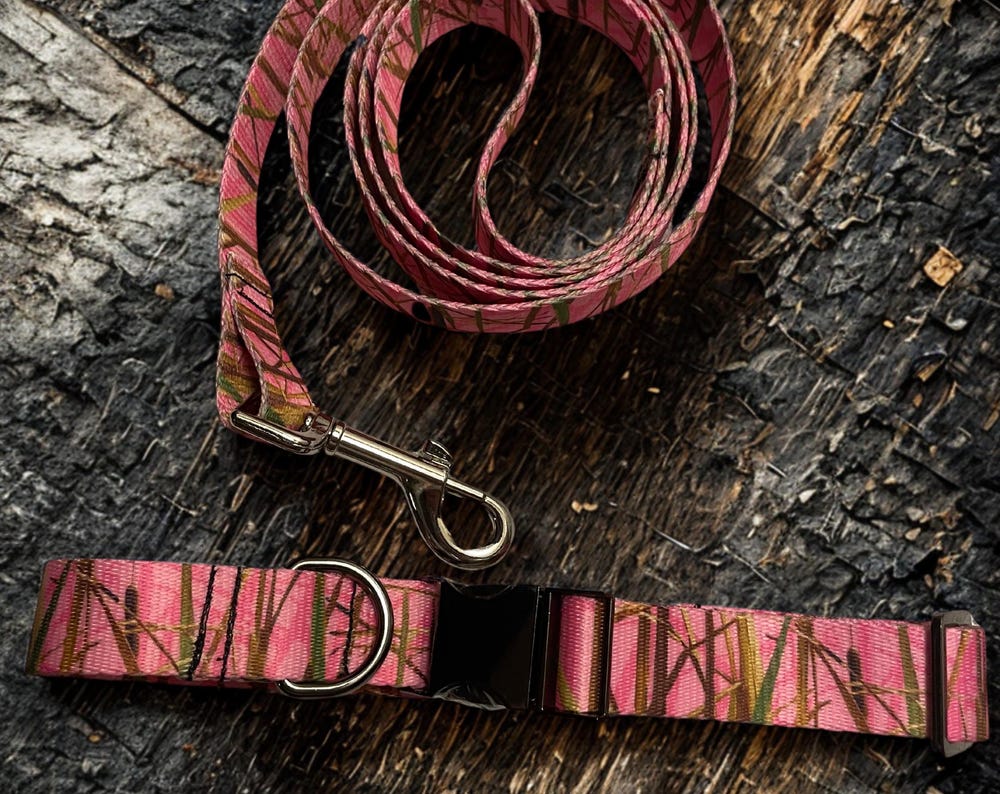
To store dog collars and leashes so they last, keep them dry, out of direct sun and hung loosely where air can reach them. Put them away bone dry, never damp, and give them their own hook rather than a spot at the bottom of a bag.
That's the short version. Most wear on a collar or leash happens on the dog, but a surprising amount happens in the hours it spends waiting by the door. A few small habits keep the strapping supple, the stitching tight and the snap hook springing shut.
Where should you keep your dog's leash and collar?
Somewhere dry, shaded and easy to reach. For most homes that's a hook by the door you use for walks.
A good spot has three things going for it:
- Airflow. A leash hanging free dries out and stays fresh. One shoved in a drawer or a coat pocket holds on to damp and smell.
- No direct sun. A sunny windowsill or a hook in a bright porch will slowly fade most dyed fabrics. Pick the shady side of the hall.
- Away from heat. Radiators, heaters and the top of the dryer dry the strapping out faster than it should.
Mudrooms and garages work too, as long as they don't get damp. If the walls sweat in winter, bring the gear inside.
How do you hang a leash without damaging it?
Hang it by the handle loop, with the rest falling straight down. That's the way it's built to take load, so the stitching at the handle is happy to carry its own weight all day.
A few things to skip:
- Tight coils wrapped around a hook. Winding a leash round and round puts a permanent curl in it and traps moisture between the loops.
- Hanging by the snap hook. The gate spring isn't meant to sit open or under strain for hours. Clip the hook to the handle loop instead, or let it hang free.
- Knots. A knot left in a leash creases the strapping in the same spot every time, and that's where it will wear first.
For a collar, clip or buckle it closed and hang it by the D-ring, or lay it flat on a shelf. Either way keeps its shape. What you want to avoid is a collar folded hard at the buckle and squashed under boots.
Should a collar or leash be completely dry before you put it away?
Yes, every time. This is the single habit that matters most. Damp strapping stored in a dark corner is how a leash ends up smelling, and it's hard on the thread too.
After a wet walk:
- Shake off the worst of the water.
- Wipe the metal hardware with a cloth. Our buckles, D-rings and snap hooks are solid cast, weld-free metal, and a quick dry keeps them looking good.
- Hang the leash from its handle or lay it flat somewhere with air moving around it.
- Leave it until it feels dry right through, including the thick layers at the handle and where the strap folds round the hardware.
If it came back muddy, wash it first. Hand wash in cool water with a little mild soap, rinse well, then let it air dry flat. The full routine is in our collar and leash washing guide.
How should you store spare collars and leashes?
Spares are worth having. A second collar means your dog is never bare-necked on wash day, and a leash in the car saves the walk when you forget the one by the door.
Store them the same way, just for longer:
- Clean before storing. Put a spare away clean and dry, so it's ready when you need it in a hurry.
- Loose, not crushed. A drawer or a breathable fabric bag is fine. Sealed plastic traps any leftover moisture.
- Tags off. Metal tags left clipped on can rub marks into the strapping over months. Keep them in a small pouch next to the collar.
- A car kit, checked often. A leash stored in the boot lives with heat in summer and damp in winter. Pull it out every month or so, check it over and let it air if it needs it.
If you keep collars in a few prints and swap them around, a matching collar and leash set stored together means you grab both in one go and they always go out as a pair.
What should you check before using a stored collar?
Anything that has sat unused for a while gets a quick once-over before it goes on your dog.
- Buckle. It should click shut firmly and open without forcing.
- Snap hook. Press the gate and let go. It should spring fully closed on its own.
- Stitching. Run your thumb along the seams, especially at the handle and around the D-ring.
- Strapping. It should feel flexible. Stiff, cracked or fraying strapping means it's time to retire it.
- Fit. If the spare has been in a drawer for months, your dog's neck may have changed. Do the two-finger check and adjust the slider.
If something doesn't pass, don't risk it on a walk. Retire it and use a fresh one.
Ready to set up a spare for the car or the clean-collar days? Browse our handmade dog leashes, cut from heavy-duty strapping with solid cast metal hardware.
FAQ
Is it OK to leave a leash in the car?
It's handy, and plenty of people do. Just check it every month or so. A car gets hot in summer and damp in winter, so take the leash out, look over the snap hook and stitching, and let it air before it goes back.
Why does my dog's leash smell even though I wash it?
Usually because it's being put away before it's fully dry. The thick layers at the handle hold water longest. Hang it by the handle somewhere with good airflow and give it longer than you think it needs.
Can I store a collar with the tags still on?
For a day or two, sure. For long-term storage, take them off. Hanging metal rubs against the strapping over time, and tags are easy to lose from a collar sitting in a drawer. Embroidering your number on the strap means there's nothing to take off at all.
Want a collar that's ready the moment you need it? Have a look at our handmade dog collars.