
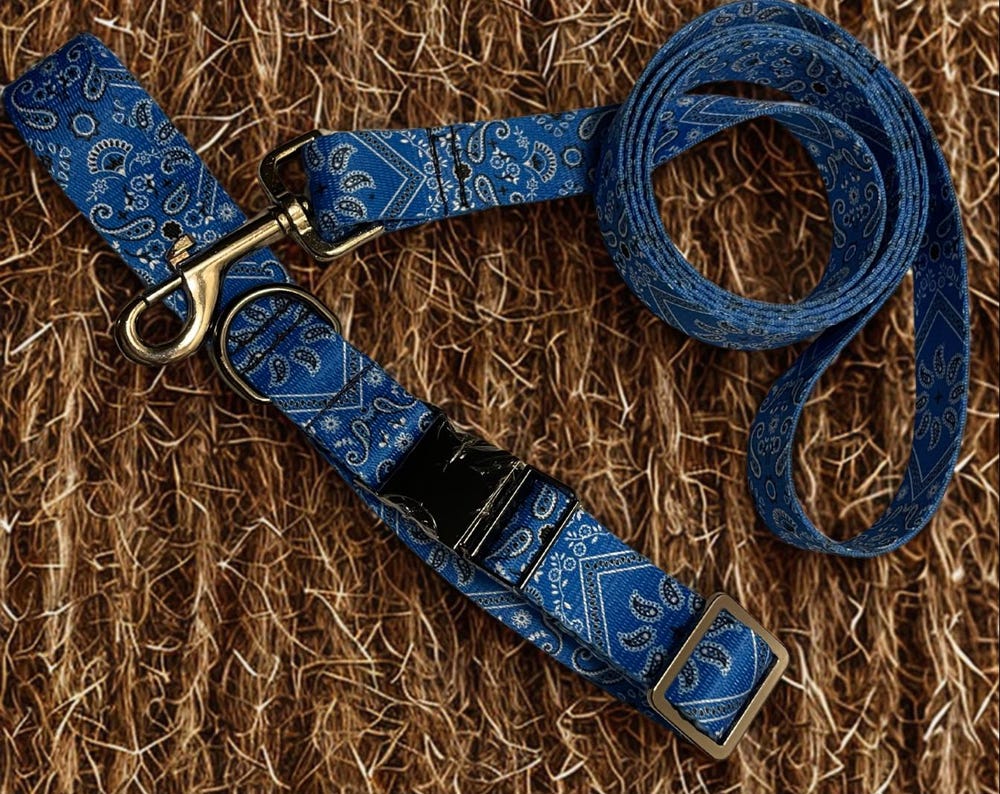
Wrap a soft tape measure around your dog's neck where the collar naturally sits, add two finger widths, and that number is your collar size. That's the whole method. The rest of this guide covers the details that make the difference between a collar that fits and one that rubs, slips or gets chewed off in the car.
Every collar we make is cut to order, so the size you pick is the size you get. Take the minute to measure and you'll skip the swap.
What you need
- A soft sewing tape measure. If you don't have one, a piece of string or a phone charging cable and a ruler works fine.
- Your dog, ideally after a walk when they're calm.
- A treat. Measuring goes faster when there's something in it for them.
Don't use a metal tape measure. It won't curve around the neck and the edge is sharp.
Step 1: Find where the collar sits
A collar rides low on the neck, just above the shoulders, not up under the jaw. Feel for the spot where the neck meets the body and the fur is thickest. That's where you measure. Measuring higher up gives you a number that's too small, and the collar will feel tight once it settles into its natural position.
For long-haired dogs, part the fur and get the tape against the skin rather than over the coat. A collar sits in the fur, not on top of it.
Step 2: Wrap and read
Wrap the tape snugly around the neck at that spot. Snug means the tape is touching all the way around with no gaps, but you're not pulling it tight. Read the number in inches.
If you're using string, mark where it meets and lay it flat against a ruler.
Take it twice. Dogs shift, and a second reading catches a wrong first one.
Step 3: Add two fingers
Slide two fingers, flat, between the tape and your dog's neck. If they fit without forcing, you're at the right tension. If they don't, loosen the tape until they do, then read the number again.
That two-finger gap is the standard for a safe fit. Tight enough that the collar can't slip over the head when your dog backs up, loose enough that it doesn't press on the windpipe.
Write that final number down. That's the measurement you'll use.
Match it to a size
Our collars come in five sizes. Find the range your number falls in:
- Small: 8 to 11 inches. Chihuahuas, Yorkies, toy poodles and most puppies.
- Medium: 11 to 14 inches. Pugs, French bulldogs, mini dachshunds, cocker spaniels.
- Large: 14 to 18 inches. Beagles, border collies, most mixed-breed medium dogs.
- XL: 18 to 22 inches. Labradors, golden retrievers, huskies, boxers.
- XXL: 22 to 28 inches. Great Pyrenees, mastiffs, Newfoundlands and other giants.
Each collar has an adjustment range inside its size, so a 12-inch neck and a 13.5-inch neck both fit a Medium. You can also type your number into the size finder on our size guide and it will pick the size for you.
Between sizes? Here's what to do
If your dog's number sits right at the top of a range, go up a size. A collar at the very end of its adjustment has no room left for a winter coat, a bit of weight gain or a growing pup.
If the number sits at the bottom of a range, stay in that size. Going down would put you at the tight end of the smaller collar.
Puppies are the exception. If your dog is under a year old, size for the neck they have now, not the neck they'll have. A collar that fits properly today keeps them safe on the leash today. You'll buy another one when they grow, and that's normal.
If you're really stuck, send us the measurement through the custom order form and we'll tell you which size to pick, or make one to your exact number.
Pick the right width
Width matters as much as length. A wide collar spreads pressure across more of the neck, which is kinder to strong pullers and big dogs. A narrow collar is lighter and sits better on a small frame.
- Small dogs: half-inch to five-eighths of an inch wide.
- Medium dogs: one inch.
- Large and giant dogs: one to one and a half inches.
Our collars are cut from heavy-duty strapping in the width that suits each size, with solid cast, weld-free metal hardware that doesn't bend open under a lunge. If you want a different width for a particular dog, ask when you order.
Check the fit when it arrives
Put the collar on, buckle it, and do the two-finger test again. Then hold the collar and gently pull it toward your dog's ears. It should stop at the head, not slide over it. If it slides, tighten one notch and test again.
Check the fit every few weeks for the first couple of months on a young dog, and any time your dog's weight changes. A collar that was right in spring can be tight by winter under a thick coat.
FAQ
Should I measure over the fur or under it?
Under it. Part the coat and get the tape against the skin. A collar works its way into the fur within a day, so measuring over the coat gives you a size that's too big.
My dog won't sit still. Any tricks?
Measure right after a walk, use a treat, and have a second person hold the leash. If it's still a fight, measure a collar your dog already wears comfortably from the buckle to the hole you use, and send us that number instead.
Can I add my dog's name to the collar?
Yes. Every collar can be embroidered with your dog's name and your phone number, priced per letter, and you'll see the total as you type it in. It's the simplest way to get a lost dog home.
Ready to pick one out? Our handmade collars come in every size above, and each has a matching leash if you'd like the set.