
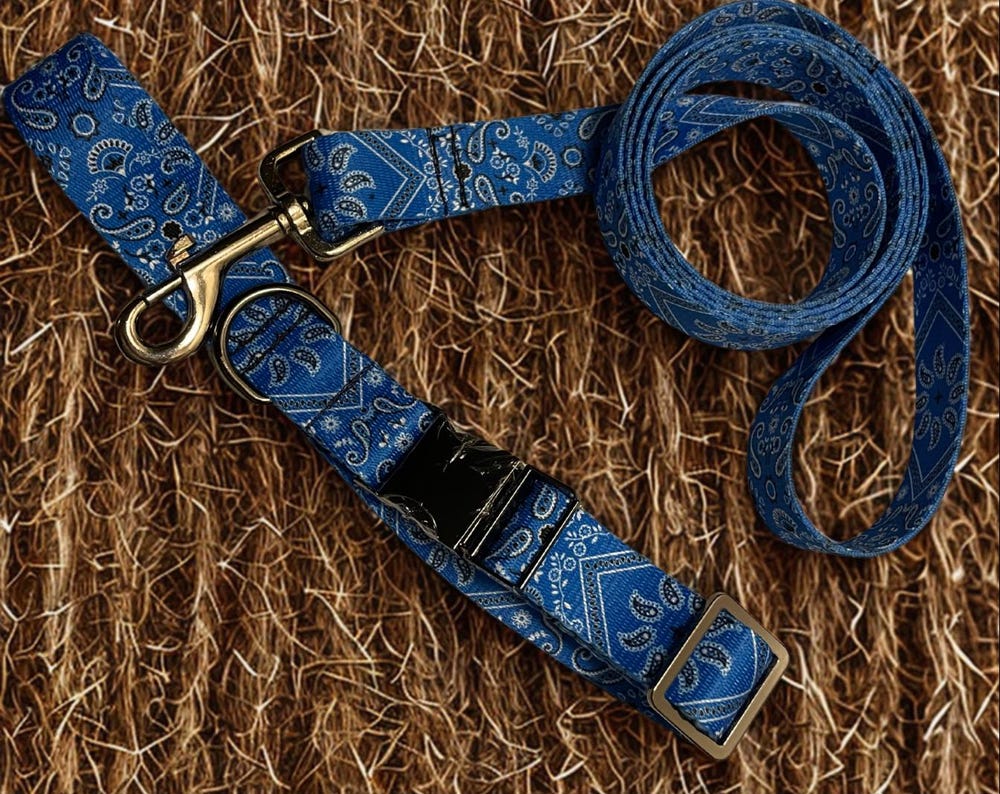
Most dogs get used to a harness in about a week if you teach the head-through part on its own first, then add the body strap, and keep every session short and rewarding. The usual mistake is wrestling the whole thing on in one go, which teaches your dog that the harness means being held down.
A harness is a bigger ask than a collar. It goes over the head, wraps the ribcage and touches the armpits, which are all places plenty of dogs don't love being handled. So it gets its own plan.
Why do dogs hate having a harness put on?
Usually it's the putting on, not the wearing. Watch closely and you'll often see a dog who is perfectly relaxed once the harness is fastened, but ducks, backs off or goes stiff while it's being fitted.
The common triggers:
- Something coming over the head. Ducking away from an opening is a normal reaction, especially in dogs who are head-shy.
- Hands near the legs and armpits. Reaching under the chest feels like being grabbed.
- The sound of the buckle. A clip snapping right by the ear makes some dogs flinch.
- Being held still. Pinning a wriggling dog gets the harness on today and makes tomorrow harder.
- A bad fit. A harness that rubs or pinches gives your dog a real reason to object. Our guide to fitting a harness so it doesn't rub covers that side.
None of these are fixed by speed. They're fixed by breaking the job into small pieces your dog can say yes to.
How do you introduce a harness, step by step?
Five minutes, once or twice a day. End each session while your dog is still keen.
- Sniff and treat. Put the harness on the floor, let your dog investigate, and treat for any interest. That's it for session one.
- Teach head-through. Hold the neck opening open with a treat on the far side. Let your dog push their head through to get it, then let them back out. Your dog chooses to put their head in. You never pull it over.
- Hold it there. Once they're happily diving through, feed two or three treats while their head is in the opening before they back out.
- Practise leg handling separately. Without the harness, touch behind the front leg, treat, let go. Then lift a paw for a second, treat, put it down. A few reps a day.
- Add the body strap. Head through, then bring the girth strap around behind the front legs. Treat, fasten nothing, slide it off.
- Fasten and feed. Do the buckle up, treat straight away, unbuckle. If the click bothers your dog, work the buckle in your hand near them, treating each click, before you use it on their body.
- Wear it for something fun. Harness on, then dinner, a game or a short garden potter. Take it off afterwards.
Then move it to walks. A harness should start to mean "we're going out," which is about the best association it can have.
If your dog backs off at any step, go back one step for a day. A slow week beats a fight every morning.
What do you do when your dog freezes in a harness?
Some dogs put on a harness for the first time and simply stop. Some walk oddly, some lie down, some stand like a statue. It looks dramatic and it's very common.
What helps:
- Don't drag them. Pulling a frozen dog forward on a leash teaches them the harness is unpleasant.
- Toss a treat a step ahead. Most dogs will move to get it, and once their legs are moving the freeze usually breaks.
- Get the dog moving before they think about it. Fasten the harness right before something they love, like the front door opening or a favourite toy.
- Keep it short. A minute of normal movement is a good session. Take it off while they're still walking.
- Check the fit. A harness sitting too far forward can press into the armpit. Two fingers flat under every strap, and the girth strap about two finger widths behind the front leg.
Most dogs stop freezing within a few sessions. If yours is still stiff after a week of short, positive practice, check the fit again and re-measure the chest.
How do you make putting on a harness easier every day?
Once your dog accepts it, a few habits keep it that way:
- Same spot, same routine. Harness on in the same place, right before the leash comes out.
- Let your dog come to you. Hold the opening and wait. A dog that steps in on their own is a dog that's comfortable with it.
- Don't chase. If they run off, put it away and try again in a minute. Chasing turns it into a game you lose.
- Take it off after the walk. A harness is walking gear. The collar stays on at home for ID.
- Get the size right first. Harnesses are sized by chest, not neck. Ours run Small (14–18 inch chest) through XXL (34–42 inch chest), and the full chart is on the size guide.
Ready to try a harness?
Every collar we make can be ordered as a harness in the same print. It's the Style option on the product page, adds $8, and is sized by chest. Measure first, then pick a print from the collars collection.
FAQ
How long does it take a dog to get used to a harness?
About a week for most dogs with short daily sessions. Puppies often take it faster. Head-shy dogs and dogs with no handling history can take two or three weeks. Watch the trend: if each session goes a little more smoothly, you're on track.
Should my dog wear the harness around the house to get used to it?
Only for short, supervised sessions while you're teaching it. Don't leave a harness on unattended or all day. Once your dog is comfortable, it goes on for walks and comes off afterwards, and the collar stays on for ID.
My dog accepts a collar but not a harness. Is that normal?
Yes. A collar touches one small area. A harness covers the head, chest and the skin behind the front legs. Treat it as a new skill, use the steps above, and if your dog is new to collars too, start with our post on getting your dog used to a new collar.
Ready to measure? Grab a soft tape for the chest, then choose your print from the collars collection.