
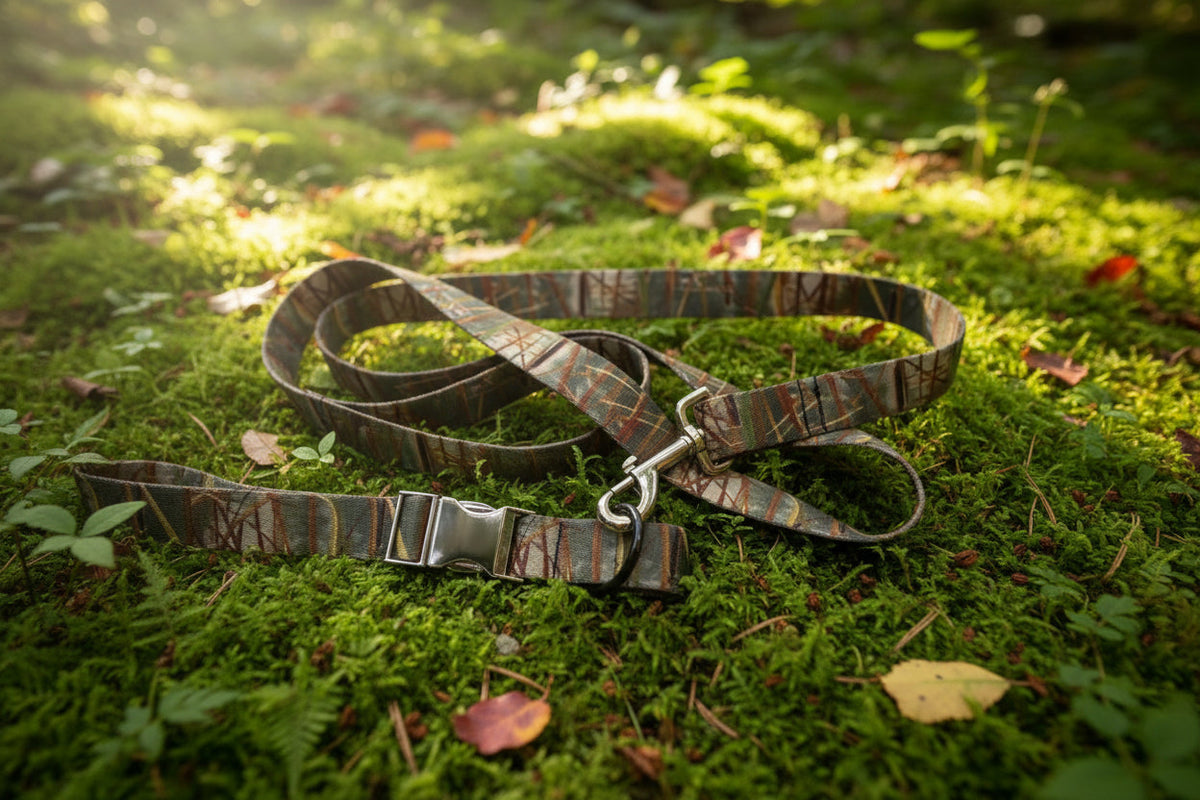
A good dog collar for swimming is one that fits snugly when wet, gets a fresh-water rinse after every swim, and dries completely before it goes back on for the night. The collar itself matters less than what you do in the ten minutes after your dog climbs out of the water.
If your dog swims now and then, the collar they wear every day is fine. If they're in the lake every weekend, a little routine will keep the collar comfortable, and keep the skin under it healthy.
Can a dog wear a collar while swimming?
Yes, for most dogs and most swims. A dog in the water is a dog that might bolt after a duck or wander along the shore, so it's worth having ID on them.
There are two times to think twice:
- Swimming among branches, reeds or docks. A collar can catch on things under the surface. If your dog swims somewhere with lots of snags, stay close and keep swims short, or let them swim without the collar while you're right there with them.
- Long sessions with a life jacket. If your dog wears a flotation vest for boating, clip the leash to the vest's handle or ring rather than the collar, the same way you would with a harness.
Never leave a dog alone in the water, collar or not. That's the real safety rule.
How should a collar fit on a dog that swims?
Fit it for the wet dog, not the dry one.
A thick coat that fluffs out when dry flattens right down when it's soaked. A collar that felt right at home can suddenly have an extra finger of room. That's how a wriggly dog slips out of a collar on the riverbank.
- Do the two-finger check after a swim, when the coat is soaked through. Two fingers should slide in flat under the strap.
- If three go in easily, tighten the slider a notch before the next swim.
- Loosen it again at home once your dog is dry, so it's not too snug overnight.
If you're not sure of your dog's size in the first place, measure around the neck where the collar sits and add two fingers, then check our size guide.
A soggy collar also tends to twist, with the buckle creeping round under the chin. That's another sign it needs a notch.
Why does a wet collar need to dry completely?
This is the part most owners skip, and it's the one that matters most.
A strap that stays damp against the skin for hours can irritate it. Water trapped under a collar, with fur holding it in place, is a good recipe for a sore, smelly patch that your dog scratches at. Dogs with thick or double coats are the most likely to have trouble here.
Get the collar off and let it dry before bedtime. Here's the routine:
- Slip the collar off once you're home.
- Towel your dog's neck, including the fur that was under the strap.
- Lay the collar flat somewhere with a bit of airflow, out of direct sun, and let it dry.
- Put it back on once it's fully dry, not just dry on the outside.
If your dog swims most days, a second collar makes this easy. One goes on while the other dries. It's also the most practical reason to own two prints.
What do lakes, pools and the sea do to a collar?
Each kind of water leaves something behind.
- Lakes and rivers leave mud, silt and algae in the weave of the strap.
- Pools leave chlorine in the fabric.
- The sea leaves salt, which dries to a stiff, gritty crust on both the strap and the metal.
The fix is the same for all three: a rinse in clean, fresh water as soon as you can. A hose or a jug of water at the car works. It takes thirty seconds and does most of the job before anything has time to set in.
After a muddy or salty day, give the collar a proper clean at home. Hand wash in cool water with mild soap, rinse well and air dry flat. Don't put it in the dryer or on a radiator to speed things up. Our full collar and leash care guide goes through it step by step.
What should you check on the buckle, ring and tag?
Our collars use solid cast metal hardware with no welded joins. Even so, metal needs a bit of attention after a swim.
- Wipe it dry. After rinsing, run a towel over the buckle, D-ring and leash clip. Don't leave it to drip dry.
- Work the moving parts. Open and close the buckle and the leash snap a few times. Grit and salt make them stiff before they make them fail.
- Look at the stitching. Check where the strap folds round the D-ring. Loose threads there mean the collar is due for retirement.
Most styles can also be made with a plastic buckle instead of a metal one. If you'd like that for a water dog, ask us through the contact page before you order.
Then there's ID. Embroidery has a couple of small advantages for a swimmer. Your dog's name and your phone number stitched into the strap can't unhook in the water or snag on a branch, and there's no tag to dry off. Embroidery is $2 a letter on any collar or leash.
If you'd rather have a tag, we engrave those too. Give it the same rinse and wipe as the rest of the hardware.
Ready to kit out your water dog? Pick a spare so one can always be drying. A matching collar and leash set covers the collar and the drive to the lake in one go.
FAQ
Is it OK for my dog to sleep in a wet collar?
It's better not to. A damp strap held against the skin all night can irritate it. Take the collar off, towel the neck and let the collar dry fully. Put it back on in the morning, or swap in a dry spare.
How often should I wash the collar of a dog that swims a lot?
Rinse it in fresh water after every swim, and hand wash it with mild soap whenever it smells or looks grubby. For a dog in the water most days, that could be once a week in summer.
Will salt water damage my dog's collar?
Salt left to dry on a collar stiffens the strap and makes buckles and clips harder to work. A fresh-water rinse and a wipe of the hardware after every beach trip stops it building up.
Make swim season easier with a spare in the rotation. Browse our handmade collars.