
Short answer: a collar is for everyday wear and identification, a harness is for the walk if your dog pulls, is very small, or has a neck or breathing issue. Most dogs do best with both, worn for different jobs. Here's how to decide what your dog needs.
What a collar does well
A collar stays on all day. It carries the ID tag, it's what a neighbour grabs if your dog slips out the gate, and it's the quickest thing to clip a leash to for a trip down the driveway.
- Identification. A tag on the collar, or your dog's name and your phone number embroidered right into it, is the fastest way a lost dog gets home. Harnesses come off at the door. Collars don't.
- Comfort for all-day wear. A well-fitted fabric collar is light enough that most dogs forget it's there.
- Control for calm walkers. If your dog walks on a loose leash, a collar gives you all the steering you need.
- Speed. One buckle, done. No straps to untangle at 6am.
The limits: a collar puts leash pressure on the neck. For a dog that lunges at squirrels or drags you toward every other dog, that's a lot of load on the throat, and on your shoulder.
What a harness does well
A harness spreads leash pressure across the chest and shoulders instead of the neck.
- Pullers. A front-clip harness turns a lunging dog back toward you, which is the single most effective piece of gear for a dog that drags.
- Small and flat-faced breeds. Chihuahuas, Yorkies, pugs and Frenchies have delicate windpipes. Vets usually recommend walking them on a harness.
- Escape artists. A dog with a narrow head and a thick neck, like a greyhound or a whippet, can back out of a collar. A harness holds.
- Older dogs and recovery. A harness with a handle lets you help a stiff dog up steps or into the car.
The limits: harnesses rub if they fit badly, some dogs pull harder against a back-clip harness, and a harness is not somewhere to hang an ID tag. It takes longer to put on and it comes off at home.
So which one?
Ask three questions.
Does your dog pull? If yes, walk on a harness, at least while you're training. Keep the collar on for ID.
Is your dog under about 15 pounds, or a flat-faced breed? Harness for walks, collar for ID and around the house.
Does your dog walk nicely and have a normal neck? A collar alone is fine for walks. Plenty of dogs live their whole lives happily on one.
If you answered no to all three, you're in the collar camp. If you answered yes to any of them, you're in the both camp: harness on the walk, collar the rest of the time.
Wearing both without the clutter
The trick is to think of the collar as clothing and the harness as equipment.
The collar stays on. It's the one with the name on it. Pick a pattern you like, because it's on the dog in every photo. Our handmade collars come in Small through XXL and every one can be embroidered.
The harness goes on at the door and comes off at home. Clip the leash to the harness, not the collar, and let the collar just be a collar.
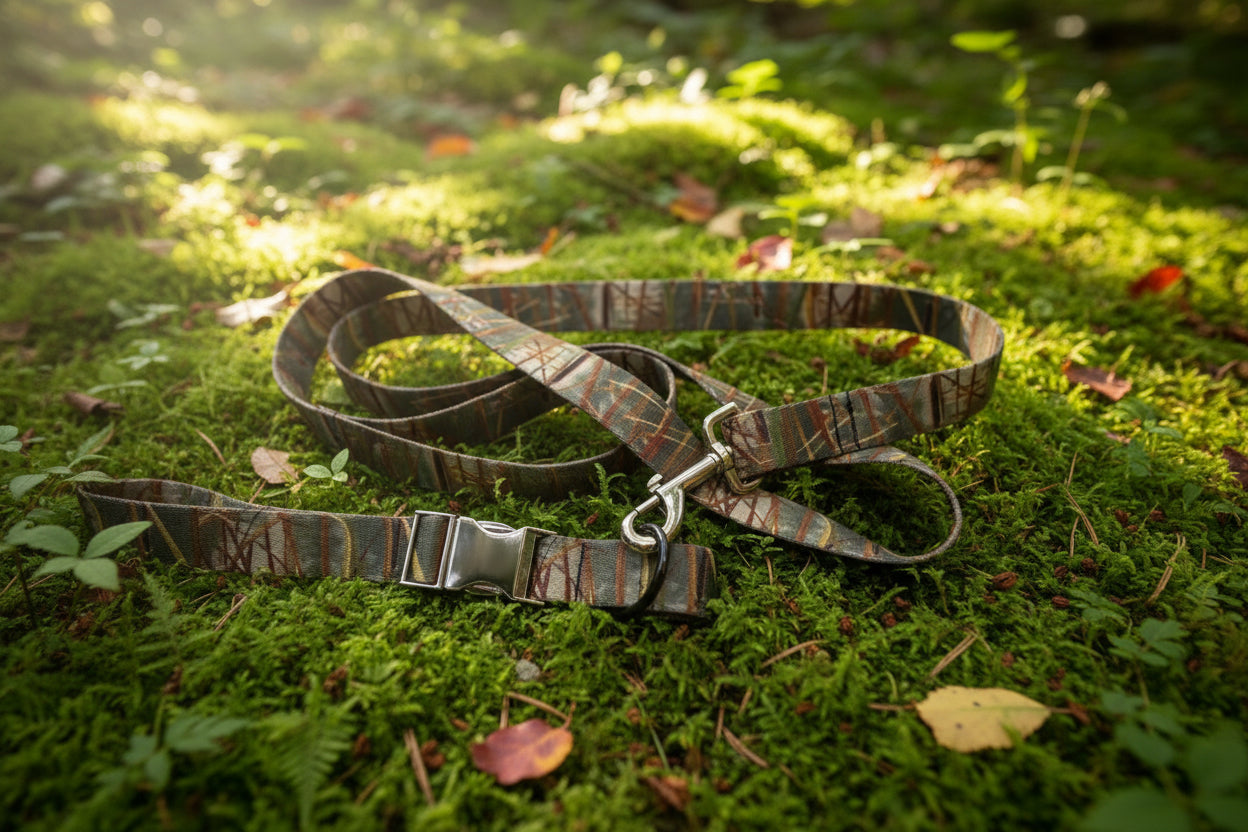
If you want the two to match, a collar and leash set in the same print keeps the look together even when the harness is a plain one.
Fit matters more than the choice
A badly fitted harness is worse than a well-fitted collar, and the other way round. Whatever your dog wears:
- Two fingers should slide between the strap and your dog, and no more.
- Nothing should rub behind the front legs or under the throat.
- Check the fit again after a haircut, a growth spurt or a change in weight.
For collars, our size guide walks you through measuring in under a minute. If your dog is between sizes or has an unusual build, tell us the measurement through a custom order and we'll cut one to fit.
FAQ
Can I attach the leash to the collar and the harness at the same time?
Yes, with a double-ended leash. Some trainers like it for dogs learning loose-leash walking, because you get a gentle cue from both points. For most walks, one clip on the harness is enough.
Is it safe to leave a collar on all the time?
Yes for a properly fitted collar. Take it off for crate time if your dog is a chewer or the crate has bars the buckle could catch on, and check the fur under it every so often for rubbing.
My puppy hates the harness. What do I do?
Start with the collar for a week so they get used to wearing something. Then put the harness on for a treat and take it straight off, a few times a day. Most puppies stop noticing it within a few days.
Ready to sort out the everyday half of the equation? Browse our handmade collars and pick the print that suits your dog.